


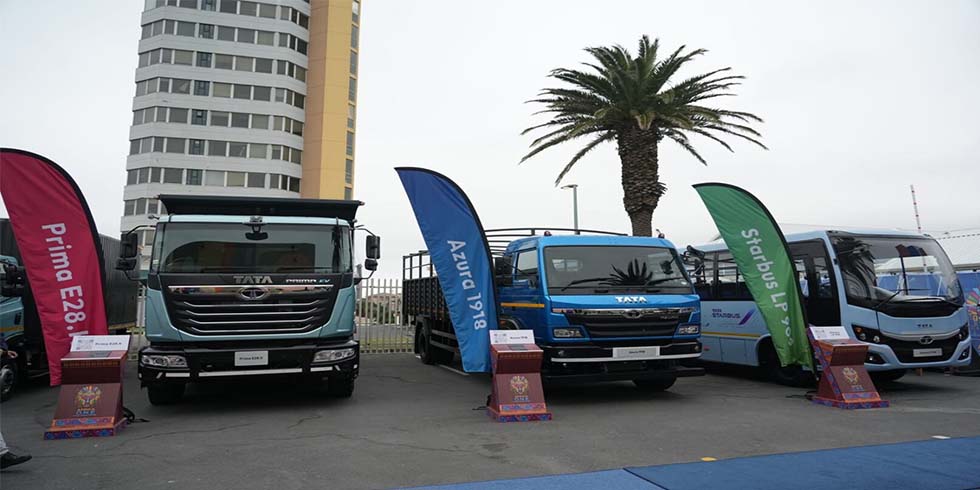
Indian automaker Tata Motors has expanded into the electric commercial vehicle segment with a new range of battery-powered trucks, which the company intends to assemble in Kenya.
The newly introduced lineup includes four electric commercial vehicle models—tippers, pick-ups, and mini-trucks—designed to meet the needs of businesses operating in the logistics, construction, and mining sectors.
Tata Motors, which currently assembles vehicles in Kenya through Associated Vehicle Assemblers (AVA), said the electric trucks will undergo local trials during the year before a broader commercial launch and the start of local assembly operations.
If the plans move forward, Tata Motors would become the first company in the region to assemble electric trucks, at a time when other manufacturers are testing battery-powered mini-trucks in Kenya in response to rising fuel costs and growing demand for cleaner transport solutions.
“We will have some vehicles running there with certain customers who are helping us try these vehicles in the market, and we are seeing increasing interest,” said Asif Shamim, the company's Head of International Business, during the product launch in Cape Town, South Africa, on Friday.
Alongside its Kenya plans, Tata is also broadening its manufacturing presence in East Africa by introducing new assembly lines in Tanzania. The expansion reflects the company's expectation that commercial transport in the region will gradually transition from diesel-powered vehicles to electric fleets.
The new electric commercial vehicle portfolio features a 250kW light-duty truck built for urban logistics, capable of travelling up to 180 kilometres on a single charge. It also includes a 450kW electric tipper developed for mining and construction applications, offering a driving range of up to 220 kilometres.
In addition, Tata introduced a 29kW electric mini-truck for last-mile delivery services with a range of approximately 155 kilometres, as well as a 72kW electric pick-up intended for urban cargo transport that can cover up to 211 kilometres on a full charge.
According to the company, vehicle specifications and model configurations will be tailored to individual African markets, taking into account factors such as transport requirements, terrain conditions, and typical operating cycles.
Kenya offers several tax incentives to electric vehicle assemblers, including exemption from import duty on fully built vehicles, reduced charges on CKD imports, a lower 10% excise duty, and zero-rated VAT. These benefits significantly lower the overall cost of EVs in the local market.
Tata also plans to support the expansion of Kenya's public EV charging network. CEO Jacques Taylor said both the public and private sectors will play an important role, with private firms likely to accelerate infrastructure development.
Electric two-wheelers continue to lead EV adoption in Kenya, while commercial vehicle manufacturers are expanding their presence as businesses increasingly embrace electric mobility.
Tata believes changing energy market trends could encourage faster EV adoption across Africa. “If we just see what happened worldwide for the past three, four months with energy prices, that might just stimulate, I think, our African markets to adopt the EVs,” said Jacques Taylor.
Alongside its electric vehicle range, Tata also introduced six new diesel truck and passenger bus models during the launch.
According to the Kenya Motor Industry Association (KMIA), Tata held a 5.58% share of Kenya’s new vehicle market, selling 204 units in the three months to March 2026.


Add Comment